
The Psychology of Gambling Why the Brain Keeps Chasing the Next Bet
Gambling rarely feels like a problem while it is becoming one. It feels like fun, then like a habit, then like something a person cannot quite explain to themselves. That gap between intention and behaviour is not a sign of weak character. It is the predictable result of how the human brain responds to uncertainty and reward, and of how modern gambling products are designed to exploit that response. Understanding the psychology underneath the behaviour is one of the most useful things a person can do, both to recognise the traps and to recover the sense of control that gambling quietly erodes.
Australia is a particularly important place to have this conversation. By most measures it records the highest gambling losses per person of any country in the world, with the average adult losing well over a thousand dollars a year and the national total running to tens of billions. Poker machines, known here as pokies, sit at the centre of that harm, and online betting has grown rapidly alongside them. These are not abstract numbers. They are the cumulative weight of millions of individual moments in which a brain did exactly what it evolved to do, in an environment engineered to take advantage of it.
The brain runs on uncertainty, not on winning
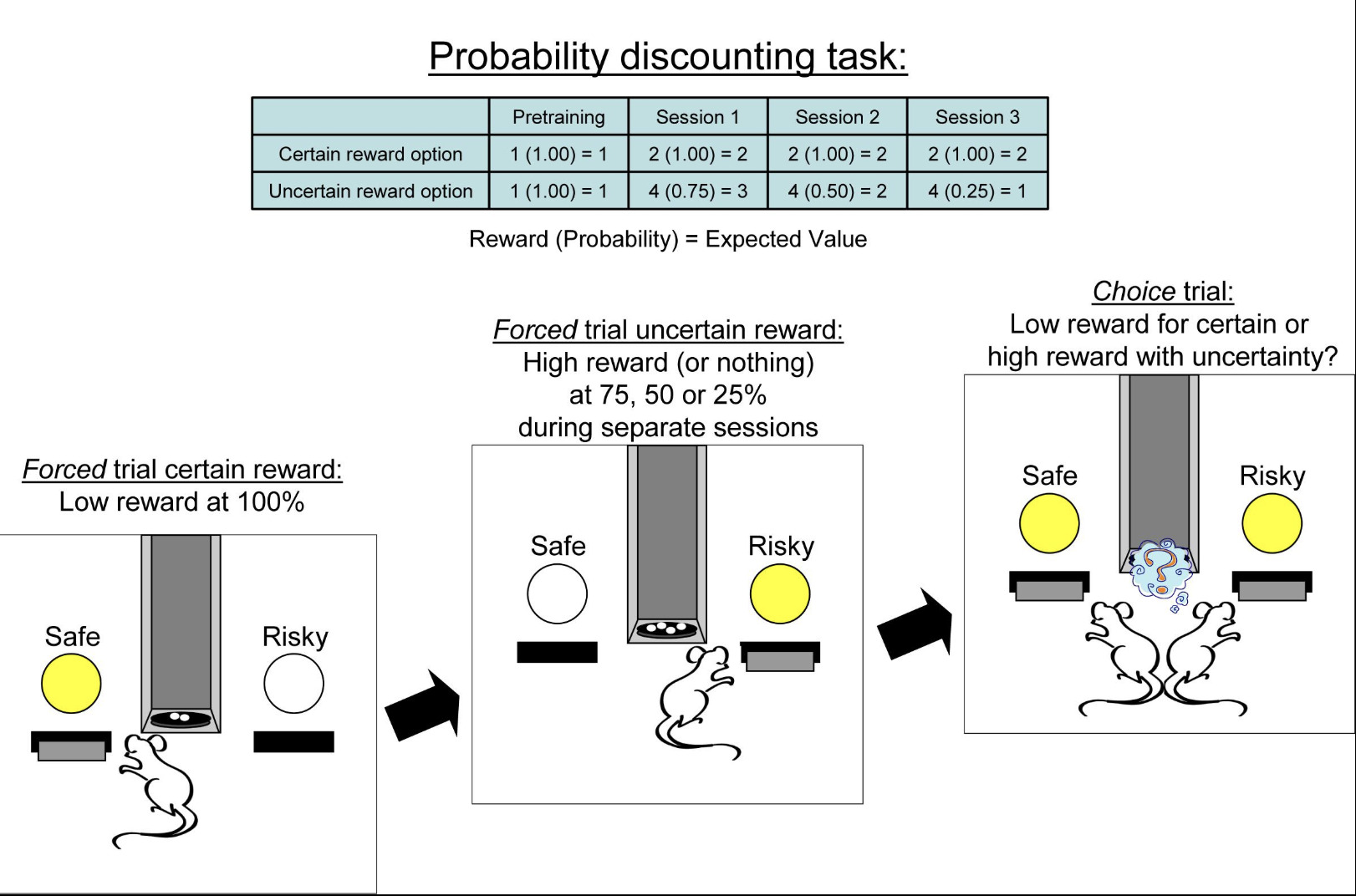
The single most important idea in the psychology of gambling is that the brain is not primarily chasing money. It is chasing uncertainty. Decades of research, going back to the foundational work on reinforcement, show that rewards delivered on an unpredictable schedule produce far more persistent behaviour than rewards that arrive every time. This is called a variable-ratio schedule, and it is the most powerful pattern of reinforcement psychologists have ever measured. A reward you cannot predict keeps you pulling the lever long after a predictable one would have lost its grip.
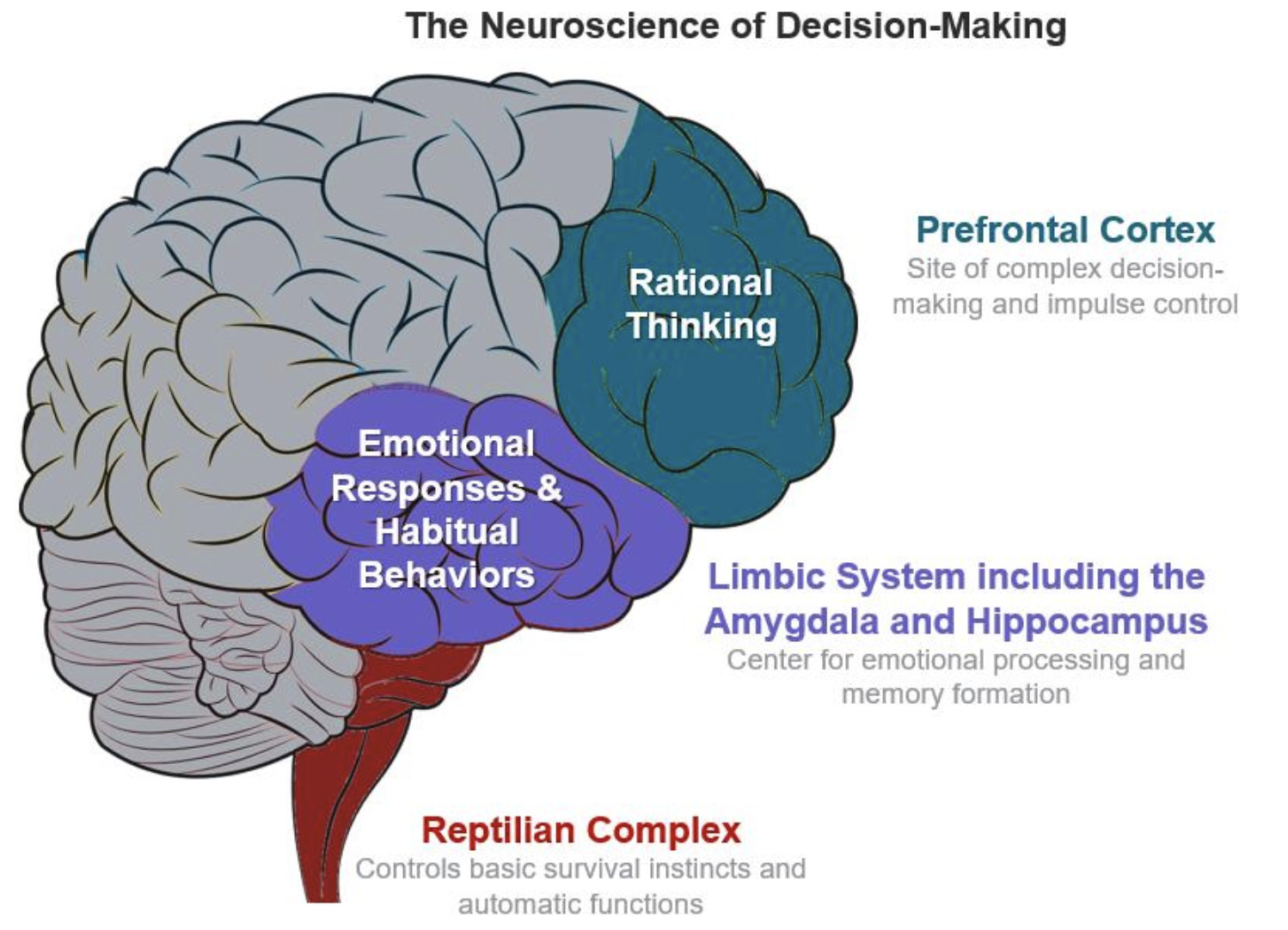
Brain imaging has sharpened this picture. The neurotransmitter dopamine, often loosely called the pleasure chemical, is more accurately a chemical of anticipation and prediction. It surges not only when a reward arrives but in the moments of uncertainty before it, when the outcome is still unknown. Gambling is essentially a machine for manufacturing that state of charged anticipation over and over, dozens of times an hour. The spinning reels, the ball circling the wheel, the few seconds before a result, these are the product. The money is almost a pretext.
Near-misses and the wins that are really losses
Once you understand that the brain rewards anticipation, the design of gambling products starts to look less like entertainment and more like engineering. Two features stand out.
The first is the near-miss. When a poker machine lands two jackpot symbols and the third stops just above or below the line, the player has lost, but the brain does not entirely register it as a loss. Studies show that near-misses activate much of the same reward circuitry as actual wins, and they powerfully encourage continued play by creating the sense that success was close and is surely coming. A near-miss is a loss dressed in the neurological costume of a win, and machines are calibrated to produce them more often than chance alone would.
The second is the loss disguised as a win. On many modern pokies, a player can bet on multiple lines at once, win back less than they staked, and still be greeted with celebratory lights and triumphant sounds. The screen flashes a number, the music swells, and the brain logs a victory even though the player is poorer than they were a second ago. This sensory theatre is not decoration. It is a deliberate exploitation of the gap between what actually happened and what the gambler feels happened.
The thinking traps that keep people playing
On top of these biological levers sit a set of predictable errors in reasoning, the cognitive distortions that gambling reliably produces. They feel like insight while a person is in their grip, which is exactly what makes them dangerous.
The illusion of control is the belief that skill or ritual can influence an outcome that is purely random. People throw dice harder for high numbers, choose their own lottery numbers as if it improves the odds, and develop elaborate systems for games where no system can work. The gambler's fallacy is its close cousin: the conviction that a run of losses means a win is now somehow due, even though each spin and each hand is entirely independent of the last. A roulette wheel has no memory, but the human mind insists on giving it one.
Then there is loss chasing, perhaps the most destructive pattern of all. After losing, the powerful urge is to keep playing to win the money back, which tends to produce larger losses, which produces a more desperate urge to recover them. This is reinforced by the sunk cost fallacy, the feeling that having already lost so much, stopping now would waste it, when in truth the money is already gone regardless of what happens next. Together these create a trap that tightens precisely as the situation worsens.
The zone, and why time disappears
Many people who experience harm from pokies in particular describe a state that researchers call dark flow, or dissociation: a trance-like absorption in which time, money and the outside world seem to fall away. The rapid, repetitive, low-effort nature of machine gambling, combined with environments built without clocks or windows, is unusually good at inducing this state. People emerge from it genuinely shocked at how long they have played and how much they have spent, because while they were in it the normal feedback loops that would have stopped them were switched off. This is not a failure of willpower. It is a designed feature of the experience.
Why this is a public health issue, not a personal failing
It matters enormously how we frame all of this. For a long time, gambling harm was treated as a question of individual morality, a problem of greedy or weak-willed people. The psychology tells a different and more accurate story. These mechanisms, the pull of uncertainty, the near-miss, the cognitive distortions, the dissociative zone, are universal features of human cognition. The products are deliberately built to trigger them, and the people most exposed, in Australia disproportionately young men and people in lower-income communities saturated with machines, are not weaker than anyone else. They are simply standing closer to a well-designed trap.
Seeing it this way is not about removing personal responsibility. It is about putting responsibility in proportion. A person can take meaningful steps to protect themselves, and those steps work far better when they are aimed at the actual mechanisms rather than at a vague resolve to try harder.
Taking back control
The most effective protections work by interrupting the psychology before it takes hold. Setting strict money and time limits before you start, rather than in the heat of play, sidesteps the loss-chasing brain. Knowing that near-misses and celebratory losses are engineered, and naming them in the moment, drains some of their power. Recognising the zone as a designed state makes it easier to break. Tools such as Australia's national self-exclusion register, which blocks access to online betting accounts, add a layer of friction that the in-the-moment brain cannot easily override. And talking to someone early, before the hole grows deep, is consistently the single most powerful step, because shame and secrecy are the conditions in which gambling harm thrives.
The brain that keeps chasing the next bet is not broken. It is doing exactly what it was built to do, inside an environment built to take advantage of it. Understanding that is the beginning of getting free of it.
Frequently asked questions
Why is gambling so psychologically addictive? Gambling delivers rewards on an unpredictable schedule, which is the most powerful form of reinforcement known to psychology. The brain's dopamine system responds strongly to this uncertainty, surging during the anticipation before an outcome. Gambling products are designed to maximise these moments of charged anticipation, which is what makes the behaviour so persistent.
What is the near-miss effect? A near-miss is when a gambling outcome falls just short of a win. Research shows near-misses activate much of the same brain reward circuitry as actual wins and encourage continued play, even though they are losses. Machines are often calibrated to produce near-misses more frequently than random chance would, because they keep people playing.
Is problem gambling a sign of weak willpower? No. The mechanisms that drive gambling harm are universal features of human cognition, and gambling products are deliberately engineered to exploit them. Problem gambling is recognised as a public health and mental health issue, not a moral failing, and effective help is available.